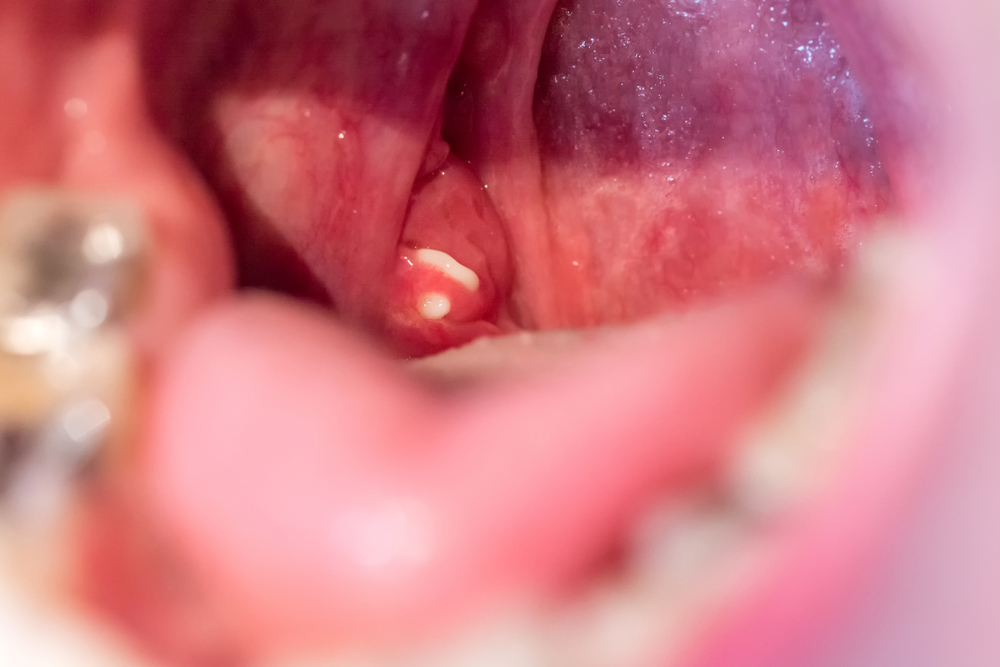
One in ten individuals gets tonsil stones. How do you know if you have them? If you have tonsils still, take a look in the mirror and examine the inside of your mouth. You’ll observe small white spots on the tonsils. These are not actual stones but clusters of calcified material. Let’s delve into more details.
What are tonsil stones?
Tonsil stones are hard white or yellow clusters on the tonsils. They begin soft but can harden over time.
Although they can be uncomfortable and cause bad breath, they pose no real concern unless they begin to grow.
Patients can develop chronic inflammation of the tonsils. There is a risk of recurrent tonsillitis.
What causes tonsil stones?
Typically, tonsil stones result from oral bacteria. Similar to your teeth, bacteria, saliva, and food particles can accumulate in and around the tonsils.
Maintaining good oral hygiene by brushing your teeth at least twice a day and daily flossing can be effective in preventing the formation of tonsil stones.
What are symptoms of tonsil stones?
Small tonsil stones may not cause any symptoms at all. Larger stones can cause multiple symptoms.
- Bad Breath. Most people with tonsil stones have the problem of infection which leads to bad breath.
- White or Yellow Bumps. You can visibly notice stones on your tonsils by looking in the mirror.
- Throat Discomfort. You may find it difficult to swallow sometimes, or it feels like something is caught in your throat. If the stone is larger, it can affect your ability to swallow food and liquid comfortably.
- Cough. Stones may irritate your throat causing you to cough.
- Sore Throat. You may have pain in the back of your throat due to larger stones, inflammation, swollen tonsils, or tonsillitis.
- Ear Pain. Because your tonsils share nerve pathways with your ear, this can cause pain in your ear.
What are treatments for tonsil stones?
If tonsil stones are not growing in size and do not trigger symptoms, treatment may not be necessary.
However, if you experience symptoms, it is advisable to consult with an ENT specialist.
Treatment options may involve:
- antibiotics
- a procedure to extract the stones
- a tonsillectomy (tonsil removal)
- cryptolysis to flatten the surface of the tonsils
Find an ENT specialist near you if you’re experiencing difficulty swallowing the uncomfortable symptoms of tonsil stones.