Oropharyngeal or oral cancer is diagnosed in more than 50,000 people every year. And that’s unfortunate because oral cancers can have a relatively high mortality rate. Most of these individuals are over 60 years old–but not exclusively.
The mortality rate is not due to oral cancer being particularly aggressive. Instead, these cancers are often challenging to treat because they’re not obvious. In many cases, oral cancer is not detected until it has reached advanced (and more difficult to treat) stages.
When oral cancer is detected early, it’s usually quite treatable. That’s why one of the best things you can do is keep an eye out for early signs of oral cancer.
What are some early signs of oral cancer?
The best way to detect the early signs of oral cancer is to see your doctor who will be able to screen for possible symptoms or presentations of a variety of cancer types.
There are some early warning signs you can keep an eye out for between visits. Some of the most common early signs of oral cancer include the following:
- Patches of white or red tissues in the mouth. These are called leukoplakia (for white patches) or erythroplakia (for the red patches). Often, these patches are nothing to worry about, but they could be an early sign of possible cancer in some cases
- Trouble swallowing.
- Numbness, tingling, or loss of sensation in the lower lip.
- Trouble moving your jaw, such as when you’re chewing or speaking.
- Loose teeth. If you have loose teeth that aren’t caused by dental or hygiene issues (your dentist or periodontist will be able to tell whether that’s the case or not), you should see a doctor.
You should also see someone if you feel like you have something stuck in your throat (like a growth), especially if this feeling is consistent.
If you experience any of these symptoms, you should talk to your ear, nose, and throat doctor immediately.
What happens at an oral cancer screening?
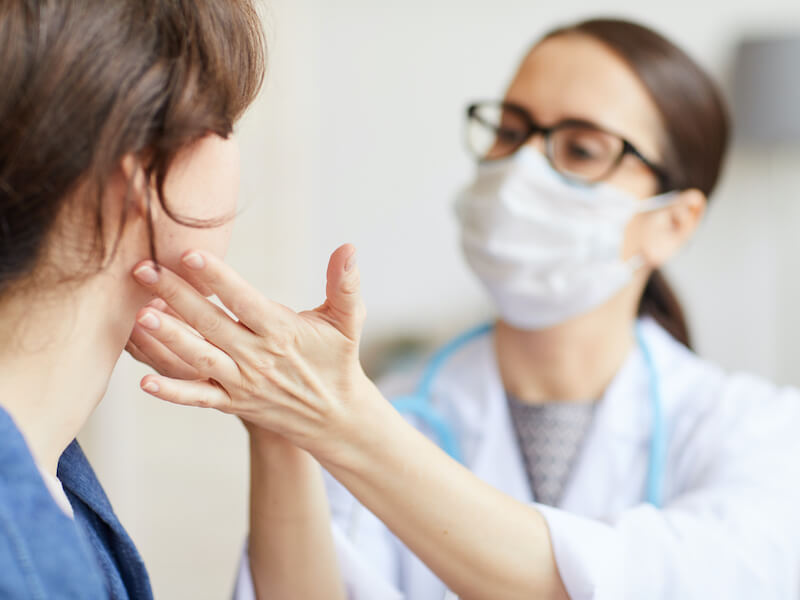
Your ENT will take a good look around your mouth and pay special attention to any red or white patches. That’s because these red and white patches can become lesions, and lesions can eventually become cancerous.
In most cases, a visual examination will be sufficient. But in some instances, your ENT may need to perform a biopsy to detect whether some tissue is cause for concern or not.
How can I stay healthy?
Cancer is more common when there is:
- Tobacco use. Smoking tobacco products can significantly increase your risk of developing a wide variety of cancers, including oral cancer.
- Excessive drinking. Alcohol has been associated with cancer. Limiting your drinking (especially when that drinking is combined with tobacco use) can help lower your risks.
- Poor nutrition. Some evidence suggests that including fruits and vegetables in your diet can decrease your risk of developing cancer.
- Family history. If you have a family history of oral cancers, your risks are going to be elevated, too.
Limit your sun exposure: Extended and prolonged exposure to the sun can increase your chances of developing lip and skin cancer.
Get regular screenings
The best way to help minimize your chance of a negative outcome from oral cancer is to see your ENT regularly. With regular screenings, the chances are better that you will be able to detect any possible cancers early–before they spread or become too advanced. This can significantly improve your prognosis.