Have you ever wondered if the shape of your ear impacts how well you hear? You may have heard that dogs with floppy ears don’t hear as efficiently as those with pointed ears. Similarly, animals like cats and hamsters can adjust their ear position to better detect sounds from different directions.
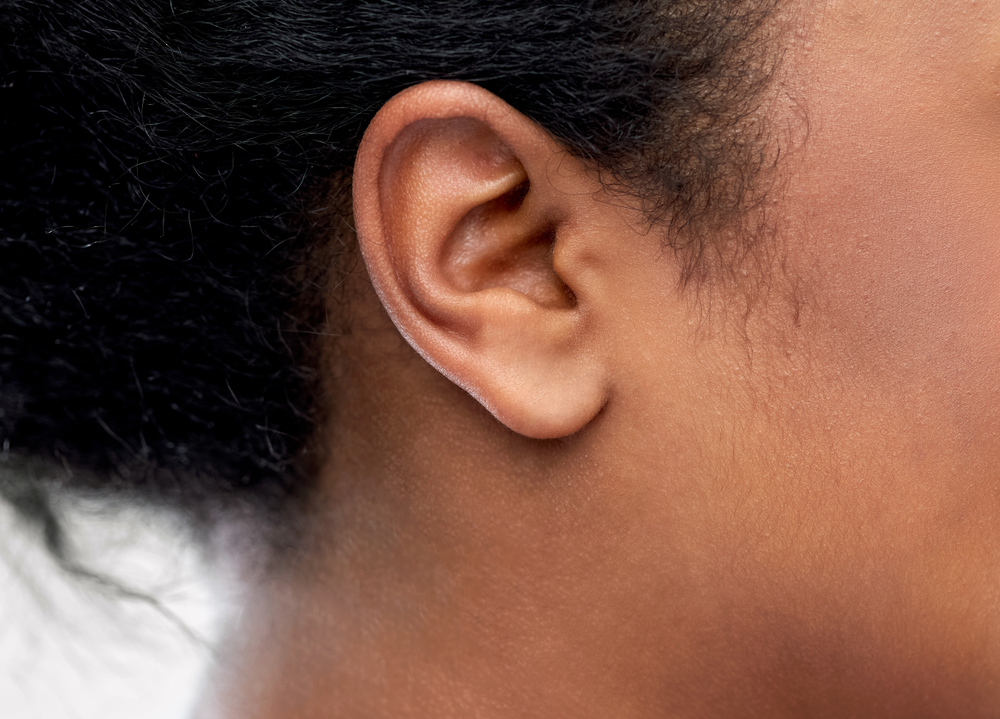
But what about humans? While we can’t swivel our ears like some animals, the shape of our outer ear—called the auricle or pinna—plays a role in how we perceive sound. Let’s explore how ear shape influences hearing and how this knowledge could impact future hearing loss treatments.
The role of the outer ear in hearing
The outer ear consists of two main components:
- The auricle (pinna): The visible part of the ear that helps direct sound waves into the ear canal.
- The ear canal: A passage that channels sound vibrations toward the middle and inner ear, where sound processing occurs.
Many people assume that hearing occurs primarily in the inner ear. While that’s true, the outer ear plays a more significant role than once thought. Even if the auricle is damaged, hearing can still occur as long as the ear canal and inner structures remain functional. This has led to the common belief that the auricle’s only role is to funnel sound into the ear. However, emerging research suggests that it does much more than that.
Scientific discoveries about ear shape and sound perception
Scientists have long known that the brain determines a sound’s direction based on which ear the sound reaches first. If a noise occurs on your left side, for example, your left ear detects it slightly sooner than your right ear, helping you identify the source. But what about vertical sound perception? How do we know if a noise is coming from above or below us?
Researchers investigated this question by altering the shape of participants’ outer ears. Instead of modifying the ear canal, they placed flexible silicone inserts into the grooves of the auricle to subtly change its shape.
What the study revealed
Before modifying the ear’s shape, participants could accurately identify whether a sound was coming from above or below them. However, once their ear shape was altered, they lost this ability. Interestingly, while they could still tell whether a sound came from the left or right, they could no longer distinguish if it was coming from above their head or near the floor.
The study also measured participants’ brain activity using functional MRI (fMRI) scans. When their ears were unaltered, neurons fired in a distinct pattern—more rapidly for sounds from below and more slowly for sounds from above. After the auricle was modified, their brain activity became erratic, as if their auditory processing system was confused.
Can the brain adapt to changes in ear shape?
To further test the brain’s adaptability, researchers had participants wear the silicone ear molds for an entire week. Over time, their brains began to adjust, and they regained the ability to distinguish whether sounds were coming from above or below. When the ear molds were removed, their hearing returned to normal, demonstrating the brain’s remarkable ability to adapt to changes in sound perception.
Implications for hearing science and future treatments
This study highlights that hearing is more complex than simply detecting sound waves. The shape of the outer ear helps our brains interpret sound location and direction, providing us with crucial spatial awareness.
Hearing specialists find this research particularly exciting because it could influence future advancements in hearing aids and auditory treatments. Modern hearing aid technology has already improved dramatically in the last two decades, but studies like this could lead to even more refined solutions. By understanding how the ear naturally processes sound direction, future devices may better replicate the brain’s ability to interpret sound in a three-dimensional space.
As research continues, hearing specialists will use these insights to enhance treatment options, ensuring individuals with hearing loss receive the most natural and effective solutions possible.