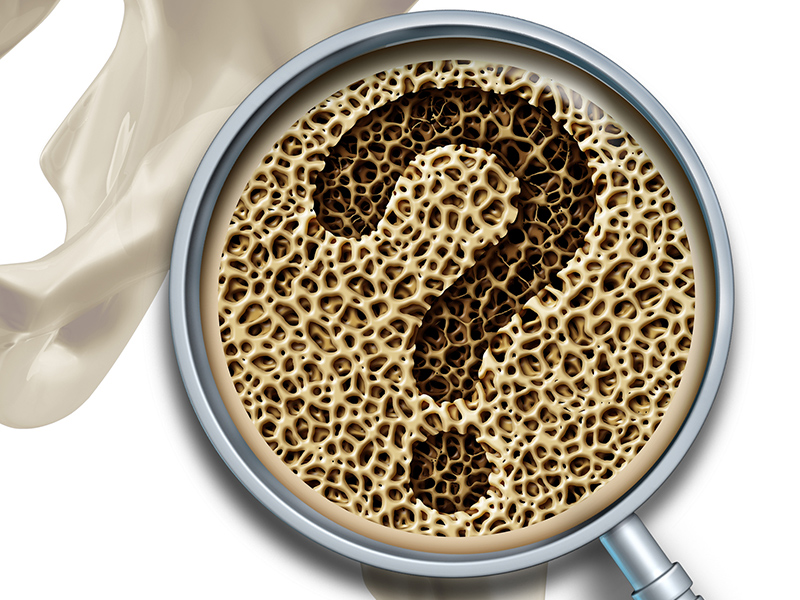
You have osteoporosis, and now the doctor is warning you of potential hearing loss, but what’s the connection? After all, osteoporosis is a condition of the bones. It is hard to connect the dots there, but studies have found that people with osteoporosis do indeed have an increased risk of sudden conductive hearing loss.
What is osteoporosis?
Osteoporosis is a condition that causes the bones to thin and become brittle. The bones in your body are constantly renewing themselves. As new bone appears, the old bone is broken down. This is a process that occurs fairly quickly during one’s youth, but bone mass starts to thin as you get older. In other words, bone breaks down faster than new bone appears.
When you’re young, your body maintains a “bank” of bone tissue, like it’s saving for retirement. People with osteoporosis have a low supply in their bank, so as bone mass naturally thins, there is nothing to draw on to make up the difference.
Why does this happen, though? Bone regeneration is a very complex process, so there are many factors at play. Gender, for example, seems to be a component as women develop osteoporosis more than men. Follow-up studies, though, show that people with osteoporosis have a similar risk of developing hearing loss regardless of gender (it’s just that more women develop osteoporosis). Diet is another prevalent issue since bone requires calcium. People who are calcium deficient in life will have less bone mass.
How does osteoporosis lead to hearing loss?
A study published in the Journal of Clinical Endocrinology & Metabolism did find that people with osteoporosis had as much as a 76 percent higher risk of spontaneous hearing loss. A follow-up study in Korea indicated around a 40 percent increase in sudden sensory neural hearing loss (SSNHL). The reason is quite simple. There are three little bones in the middle ear that enable hearing. One of those bones is the smallest in the human body. If those bones begin to dematerialize – or become brittle – one or more may break apart.
Is there a cure?
You have two options:
-
- Treat the osteoporosis as soon as possible – anti-osteoporosis therapies will reduce the risk of bone demineralization.
- It is possible to replace the bones with titanium prosthetics.
About 50 percent of those who have sudden-onset hearing loss will regain their hearing spontaneously, or at least some of it, as the bones regenerate. It is essential to get medical help as soon as your hearing fails, though. The other obvious solution if your hearing doesn’t come back naturally is hearing aids. Hearing aids can help.