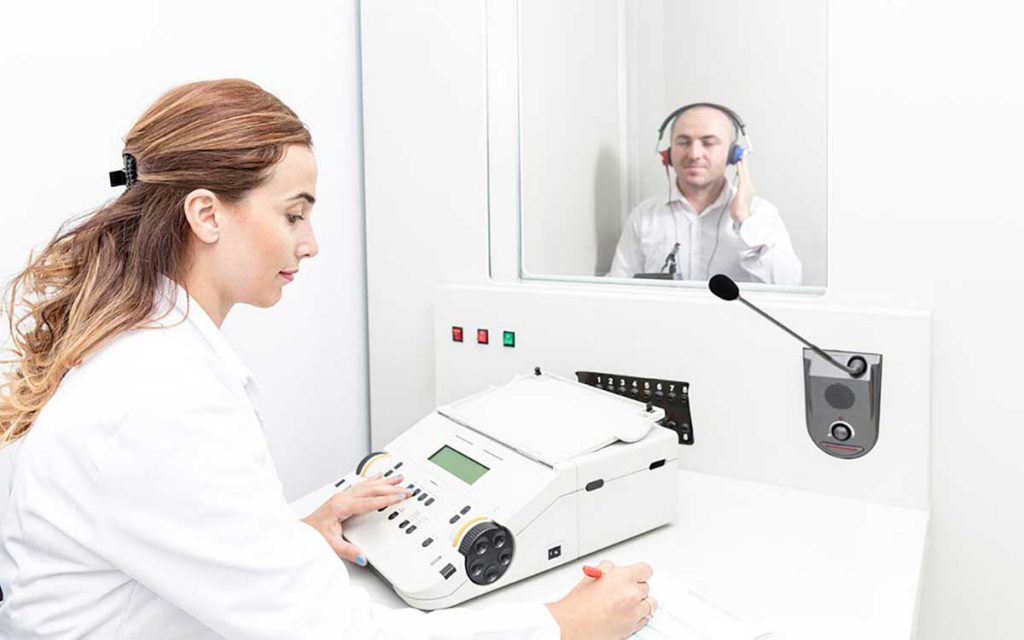
People tend to use the general term “hearing test” to describe a number of hearing assessments. Knowing the difference between hearing evaluations and hearing screenings is vital to identifying hearing problems and getting the proper treatment to ensure your hearing loss doesn’t worsen.
Hearing screenings
Hearing screenings are short, routine tests that determine whether you have hearing loss and require additional testing. If you pass your screening, you don’t need to take additional steps, other than scheduling future screenings. The screening procedure varies depending on the age of the individual.
- Newborns and small children: Most babies have a hearing screening before they leave the hospital. The screening is used to identify hearing problems so further evaluation and treatment can begin.
- Older children and adults: Older children and adults take a “pure-tone test.” This type of screening involves wearing headphones and indicating when you hear a sound. Kids should be tested every few years. Adults should get a screening every ten years, until the age of 50. The threat of hearing loss increases with age, so after age 50, you should get a screening every three years.
Hearing evaluations
If you fail your hearing screening, you will be referred to a hearing specialist. A hearing evaluation involves more than simply testing one’s hearing. Identifying the problem is only part of the process.
Your hearing specialist will begin by asking about your hearing history, as well as health issues that may affect your hearing, such as heart problems, diabetes, or regular exposure to loud sounds. The hearing specialist will check your ears for excessive ear wax.
During your evaluation, the hearing specialist will determine the answers to the following questions:
- Do you have hearing loss?
- What is causing it?
- How severe is the hearing loss and is it in one or both ears?
- What treatment options best fit your specific needs?
There are several evaluations that hearing specialists utilize, depending on factors such as age. The hearing evaluation process is a collaborative effort, so ask plenty of questions, including which type of test they are performing, and why they chose that particular test. The conversation will continue after your hearing specialist gives you the results.
Communication is essential
If the hearing specialist recommends a hearing aid, be sure to bring up your concerns. This is not the time to be shy or sulk due to a health problem that will worsen if not addressed immediately.
If it makes you more comfortable, bring a friend or family member to your hearing evaluation. Get everyone affected by your hearing loss involved. Doing this will help improve communication as you go through the process and plan for the future.
Have your hearing screened by a hearing specialist and continue to do so regularly. If you don’t pass the screening, be sure to schedule a full hearing evaluation. Untreated hearing loss can lead to a loss of income, relationship issues, emotional problems, and further hearing loss. Be proactive when it comes to protecting your hearing and the hearing of your loved ones.