Did you know one out of every three people over 65 has some level of hearing impairment? That’s millions of people.
Hearing loss is much more common than most of us think. And we may feel alone or have the desire to hide our hearing loss from those we love.
But it doesn’t have to be this way.
In fact, hearing aids have only become more accessible over the years. Part of that is thanks to the advances in battery technology. After all, batteries were initially developed in the 1700s, so we’ve seen hundreds of years of improvements!
The first hearing aid batteries
Invented by Benjamin Franklin in 1749, the battery has drastically elevated our ability to enjoy and receive services from various devices throughout history. And hearing aids are no exception. Hearing Aid batteries have come a long way since the first hearing aid made its appearance in the 1920s.
Vacuum tube hearing aid batteries
The earliest versions of hearing aid batteries were referred to as “vacuum tube” batteries. Over the years, the vacuum tube batteries went through quite a transformation in terms of their size. Vacuum tube batteries were originally composed of a 1.5-volt “A” battery to support the vacuum tube filaments and a higher voltage “B” battery to amplify the sound for the hearing aid. And these batteries were so large and bulky that they had to be held, worn on clothing, or carried in specially designed pouches.
The removal of mercury from hearing aid batteries
Mercury was used for many years in hearing aid batteries to help with the conduction of electrical impulses and to secure the inner parts, but mercury was not really safe. Mercury poisoning can affect the heart, brain, lungs, and kidneys. Around 2010, mercury batteries were replaced by safer batteries.
Size comparison
Today, the hearing aid battery is at least a sixteenth of the size it was when it was originally created. Behind-the-ear hearing aids and their batteries are even smaller still. And, with such rapid advancement of technology, we can only expect hearing aid batteries to become increasingly smaller and more convenient.
Modern hearing aid batteries
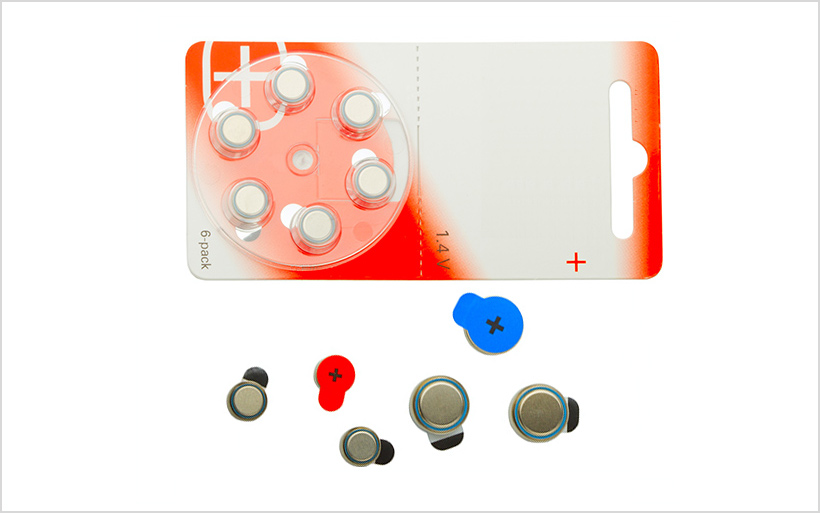
Modern-day button battery designs allow for a more subtle and oftentimes completely unnoticed hearing aid to be worn.
Rechargeable hearing aid batteries
With rechargeable batteries, you’ll likely need to purchase new batteries about once a year. These hearing aid batteries are popular among those wishing to decrease their impact on the environment. Plus, they are more convenient as they don’t need to be replaced as often. They simply recharge overnight. For every 100 or so disposable hearing aid batteries, you can use one rechargeable battery.
Zinc-air button disposable batteries
The most common hearing aid battery today, zinc-air button disposables, are air-activated and can store their charge until a specialized seal is removed from the battery. If you wait a few minutes after removing the seal to put it in your device, you’ll enhance the quality of the battery life.