

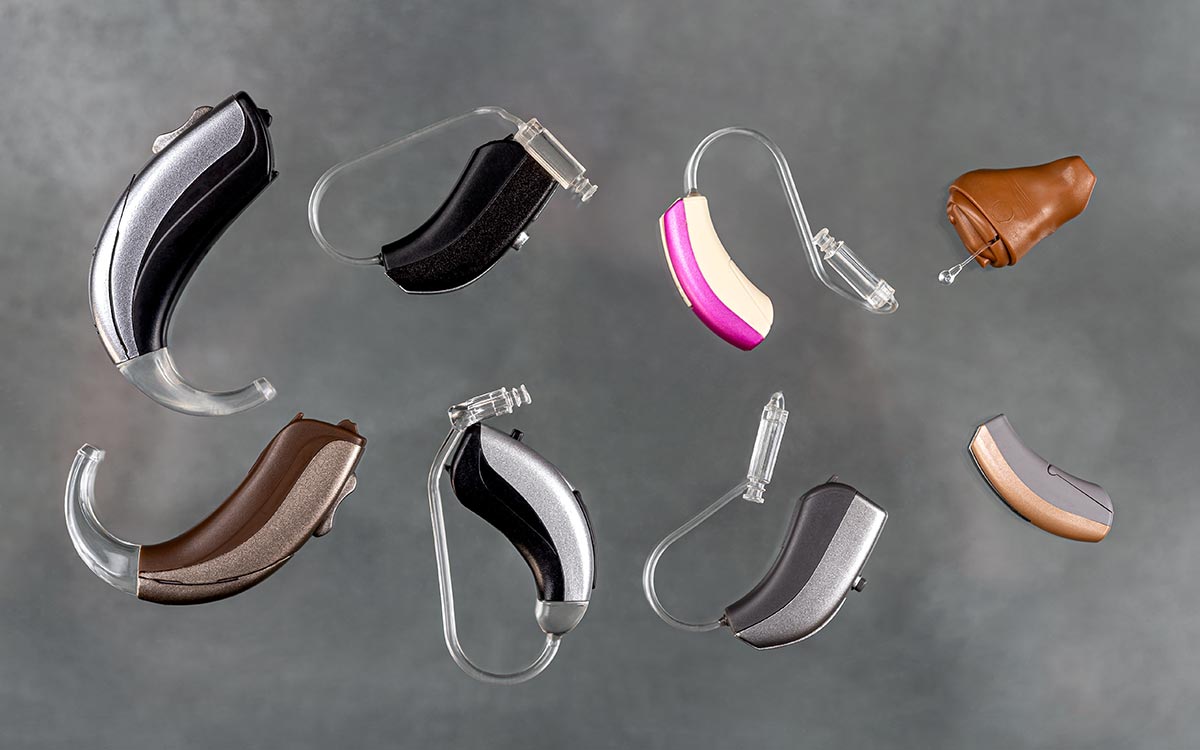

Choosing a hearing aid can feel overwhelming, especially when today’s devices come in so
many styles, sizes, and technology levels. But no matter your needs, there’s a hearing
solution for every lifestyle, preference, and degree of hearing loss. It’s just a matter of
finding it!
Understanding the differences among the most common types of hearing aids can help you feel more informed and confident as you explore your options. Today, we’re breaking down the different hearing aid styles and what makes each one unique.
In-the-Canal (ITC) Hearing Aids
What they are:
ITC hearing aids sit partly in the ear canal, with a small portion visible at the outer ear.
Why people choose them:
- More discreet than larger models
- Custom-molded for comfort
- Suitable for mild to moderate hearing loss
ITC devices offer a good balance between visibility and functionality, making them a
popular choice for first-time users.
Invisible-in-Canal (IIC) Hearing Aids
What they are:
IIC hearing aids are the smallest custom style available. They sit deep inside the ear canal and are virtually invisible when worn.
Why people choose them:
- Maximum cosmetic discretion
- Natural sound quality due to microphone placement
- Lightweight and comfortable
Because of their tiny size, IIC devices typically work best for mild to moderate hearing loss and for those who prefer a nearly invisible option.
In-the-Ear (ITE) Hearing Aids
What they are:
ITE hearing aids fill either the entire outer ear (full-shell) or the lower portion (half-shell).
They are custom-made to fit the contours of your ear.
Why people choose them:
- Larger size allows for more features and longer battery life
- Easier to handle for those with dexterity challenges
- Suitable for mild to severe hearing loss
ITE models are often chosen by individuals who want a simple, all-in-one design without
behind-the-ear components.
Behind-the-Ear (BTE) Hearing Aids
What they are:
BTE hearing aids rest comfortably behind the ear. Sound travels into the ear canal through a small tube or custom earmold.
Why people choose them:
- Highly versatile and durable
- Work for nearly all degrees of hearing loss
- Offer room for advanced features and rechargeable batteries
BTE devices are a wonderful option for individuals seeking reliability, ease of use, and strong amplification.
Receiver-in-Canal (RIC) Hearing Aids
What they are:
RIC hearing aids look similar to BTE models, but the speaker (receiver) sits inside the ear canal rather than inside the device behind the ear.
Why people choose them:
- Very natural sound quality
- Small, lightweight, and comfortable
- Great for many levels of hearing lossRIC devices are one of today’s most common styles, thanks to their blend of comfort, aesthetics, and performance.
Extended-Wear Hearing Aids
What they are:
These devices are placed deep in the ear canal by a hearing professional and can stay in place for several weeks at a time.
Why people choose them:
- No daily insertion or removal
- Nearly invisible
- Designed to be worn during everyday activities, including sleeping and exercising
Extended-wear devices are ideal for those who want a “set it and forget it” approach.
Bluetooth-Enabled Hearing Aids
What they are:
Hearing aids with wireless connectivity that pair with smartphones, tablets, computers, and sometimes TVs.
Why people choose them:
- Stream calls, music, and audio directly to the hearing aids
- Adjust settings through an app
- Improved convenience for modern lifestyles
Bluetooth features are available across many styles, including RIC, BTE, and some ITC
models.
Middle-Ear Implants
What they are:
A surgically implanted device that directly vibrates the middle ear bones to amplify sound.
Why people choose them:
- Option for those who cannot use traditional hearing aids
- Comfortable alternative for chronic ear issues related to traditional devices. Middle-ear implants are typically recommended only after a full evaluation by an ENT or
hearing specialist.
Finding the Hearing Aid That Fits Your Life
Every hearing aid style offers its own advantages, and the right option depends on your
level of hearing loss, comfort preferences, lifestyle, and cosmetic considerations. A hearing
care professional can guide you through your choices, answer questions, and help you
experience how different devices look and feel.
If you’re ready to explore the possibilities, schedule a hearing evaluation today. It’s a great first step toward better hearing and more confident communication every day.
Sources:
https://www.mayoclinic.org/diseases-conditions/hearing-loss/in-depth/hearing-aids/art-
20044116
https://www.hearinglife.com/hearing-aids/types
https://www.nidcd.nih.gov/health/hearing-aids